




.jpg)
Summer should be about making memories, not worrying about your prosthesis
Summer has a way of slowing life down.
Long evenings on the terrace, walks along the beach, family barbecues, bike rides, or simply enjoying an ice cream before it melts in the sun. It's a season made for being outdoors. But if you wear a lower limb prosthesis, summer can also bring a few unwelcome surprises.
Your socket suddenly feels tighter than usual. Sweat builds up more quickly. The skin becomes more sensitive. A walk that felt effortless in spring can become surprisingly tiring on a hot afternoon.
If this sounds familiar, you're not alone.
The good news is that many of these changes can be a normal response to hot weather. They're not necessarily a sign that something is wrong with your prosthesis, they're often simply the result of how the human body reacts to heat.
Here, we'll look at how hot weather affects both your body and your prosthesis before sharing a few practical tips that will hopefully help you stay comfortable and reduce heat-related discomfort.
.jpg)
Hot weather can make wearing a prosthesis feel more challenging. Sweating, humidity and changes in residual limb volume may affect comfort and skin health.
A few simple habits can help:
But why does this happen in the first place? And how can you prevent problems such as irritation, slipping or excessive moisture? Understanding how heat affects your body and your prosthesis can help you manage these challenges more effectively.
Our bodies are remarkably good at keeping themselves cool.
Whenever our internal temperature rises whether because of hot weather, exercise or simply spending time in the sun, the body immediately starts working to release excess heat.
Its most effective cooling system? Sweating.
As sweat evaporates from the surface of the skin, it carries heat away with it, helping to regulate body temperature.
For people with a lower limb prosthesis, however, this natural cooling process becomes a little more complicated.
After a lower limb amputation, several physiological changes can make hot weather feel more demanding.
First, part of the body's natural surface for exchanging heat with the environment has been lost. While this is only one piece of the puzzle, it means the body has slightly fewer opportunities to dissipate heat.
Walking with a prosthesis can also require more energy than walking with a biological limb, particularly after higher-level amputations. That extra muscular effort generates additional body heat, meaning your cooling system has to work even harder.
It's a bit like driving a car uphill on a hot day, the engine naturally produces more heat because it's working harder.
Your body works in much the same way.
This is one reason why a short summer walk may leave you feeling warmer or more fatigued than you expected.
Now imagine wearing a waterproof rain jacket on a hot August afternoon.
Even if you're standing still, heat and moisture quickly build up because very little air can circulate.
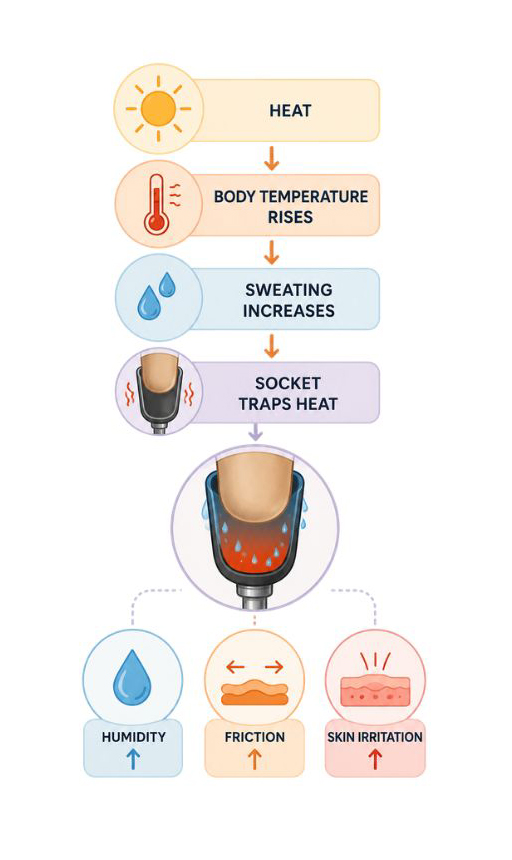
A prosthetic liner and socket create a surprisingly similar environment. Their job is to provide comfort, suspension and stability, but they also create an almost enclosed space around the stump.
As outside temperatures rise, sweat has far more difficulty evaporating. Instead of cooling the skin efficiently, moisture tends to remain trapped inside the socket.
The result?
Over time, these conditions may contribute to redness, irritation or even blisters if the skin isn't allowed to recover.
In many cases, it's not the heat itself that causes discomfort, it's the combination of heat, humidity and friction.
Have you ever noticed that a ring feels tighter on your finger during a heatwave? For some people, the residual limb may respond in a similar way.
When temperatures rise, your body naturally increases blood flow to the skin to help regulate its temperature. In some cases, particularly in hot and humid conditions, this may contribute to a temporary increase in the volume of the residual limb. Even small changes can sometimes make a prosthetic socket feel noticeably tighter.
Later in the day, the opposite may occur. After prolonged walking, physical activity or significant sweating, changes in hydration and fluid balance can contribute to a slight reduction in residual limb volume for some people. As a result, the prosthesis may feel looser than it did earlier in the day.
It's important to remember that residual limb volume naturally fluctuates throughout the day, and these changes are influenced by a combination of factors, including activity level, hydration, socket fit and environmental conditions. During the summer months, hot weather may be one of the factors that makes these fluctuations more noticeable.
If changes in fit become frequent, significant or uncomfortable, it's worth discussing them with your prosthetist, who can assess whether any adjustments are needed.
As your body warms up, the tissues can retain more fluid and slightly increase in volume. Even a few millimeters of swelling can be enough to change how your socket feels.
On the other hand, after intense physical activity or heavy sweating, your residual limb may lose volume, which can make the prosthesis feel less secure or stable.
When your skin is damp, it becomes more sensitive to friction. Warm, damp skin is naturally more fragile. Combined with the repeated movements inside the socket, moisture makes friction more likely and can increase the risk of irritation or blisters.
These repeated micro-movements between the skin and the socket can lead to:
Even mild discomfort can quickly worsen if it is not addressed early.
Sweating is probably the most common challenge prosthesis users face during the summer.
While it's impossible to eliminate it completely, there are several ways to manage it more effectively.
Clean your residual limb daily with a mild soap, then dry it thoroughly before putting your prosthesis back on.
Keeping your skin clean helps reduce the risk of irritation and limits the growth of bacteria that can cause unpleasant odors.
Cleaning the liner may help maintain its grip and prevent bacteria from building up. Be sure to let it dry completely before using it again.
Products designed to manage perspiration may be suitable for some users.
Before applying any antiperspirant or skin product to the residual limb, check that it is compatible with your skin, liner and prosthetic system, and ask your prosthetist or healthcare professional for advice.
Whenever possible, remove your prosthesis for a few minutes to let your skin breathe, allow your residual limb to dry naturally, and reduce friction.
It's perfectly normal to slow down during periods of extreme heat and taking a short break (or even enjoying an ice cream!) never hurts.
Also staying hydrated doesn't just help you feel better, it also supports your body's ability to regulate temperature and maintain healthy skin throughout the day.
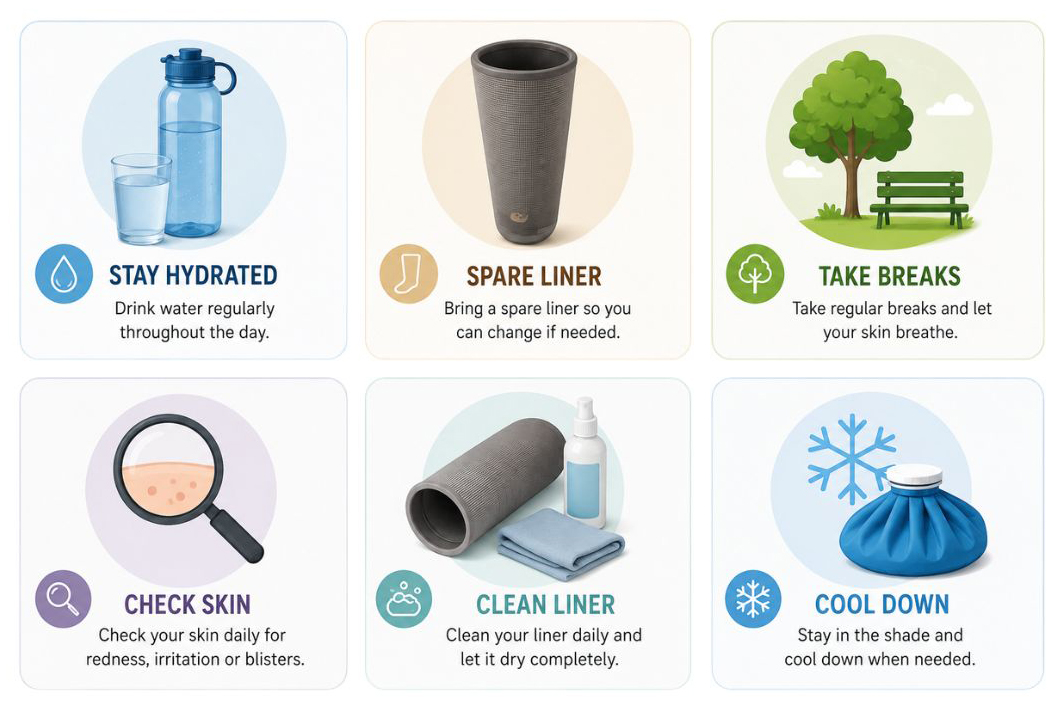
After removing your prosthesis, take a few moments to check your skin. Pain or increasing discomfort is often one of the first signs that something may need attention. If your prosthesis suddenly becomes uncomfortable, don't try to "push through it". Remove it as soon as possible and inspect your residual limb. Catching a small area of redness early is much easier than dealing with a blister or an open wound a few hours later.
A slight redness that fades within a few minutes after removing your prosthesis is generally considered normal. However, you should seek advice from your prosthetist if you notice any of the following:
These signs don't necessarily point to a single cause. They may be related to your skin, liner, suspension system, changes in residual limb volume or the fit of your socket. Your prosthetist can help identify the underlying cause and recommend the most appropriate solution.
Summer shouldn't be a season where you avoid going out, walking, or spending time with family and friends because of the heat.
While your prosthesis may require a little extra attention during warmer weather, a few simple habits can often make a big difference in keeping you comfortable.
Listen to your body, check your skin regularly, take good care of your prosthesis, and don't hesitate to contact your prosthetist if something doesn't feel right. These simple steps will help you enjoy the summer with confidence and comfort.
Sweating is your body's natural way of regulating its temperature. In hot weather, your body produces more sweat to help cool itself down. When wearing a prosthesis, the liner and socket create a warm, enclosed environment around the residual limb, which can limit airflow and make heat and moisture build up more easily.
As a result, sweating around the stump may feel more noticeable during hot weather or physical activity. This does not necessarily mean there is a problem with your prosthesis, but excessive moisture can contribute to discomfort, skin irritation or reduced suspension if it is not properly managed.
Keeping your residual limb and liner clean and dry, allowing your liner to dry fully between uses, and taking breaks when possible can help improve comfort during warmer months.
Helpful strategies include:
Hot weather can be one factor that influences residual limb volume. Changes in circulation, fluid balance, activity and hydration may affect how your prosthesis fits throughout the day. Even small volume changes can sometimes make a socket feel tighter or less comfortable.
Check your skin regularly, especially during hot weather. Clean and dry your residual limb and liner, pay attention to areas of repeated redness or pressure, and address discomfort early. Persistent irritation, blisters or wounds should be discussed with your prosthetist.
Keeping your residual limb, liner and socket clean and dry is one of the best ways to reduce slipping. Regular liner cleaning, good hygiene and a properly fitted socket also help maintain a secure and comfortable fit.


.jpg)
.jpg)
